124 #hackathons #diversity
The effectiveness of civic hackdays depends crucially on how teams are formed. Can diversity be promoted through better support? See what science has to say.

This article by Prof. Dr. Debra Hevenstone originally appeared in the BFH Blog knoten & maschen on 22.04.2026. It was subsequently translated by Oleg and is reposted here with permission.
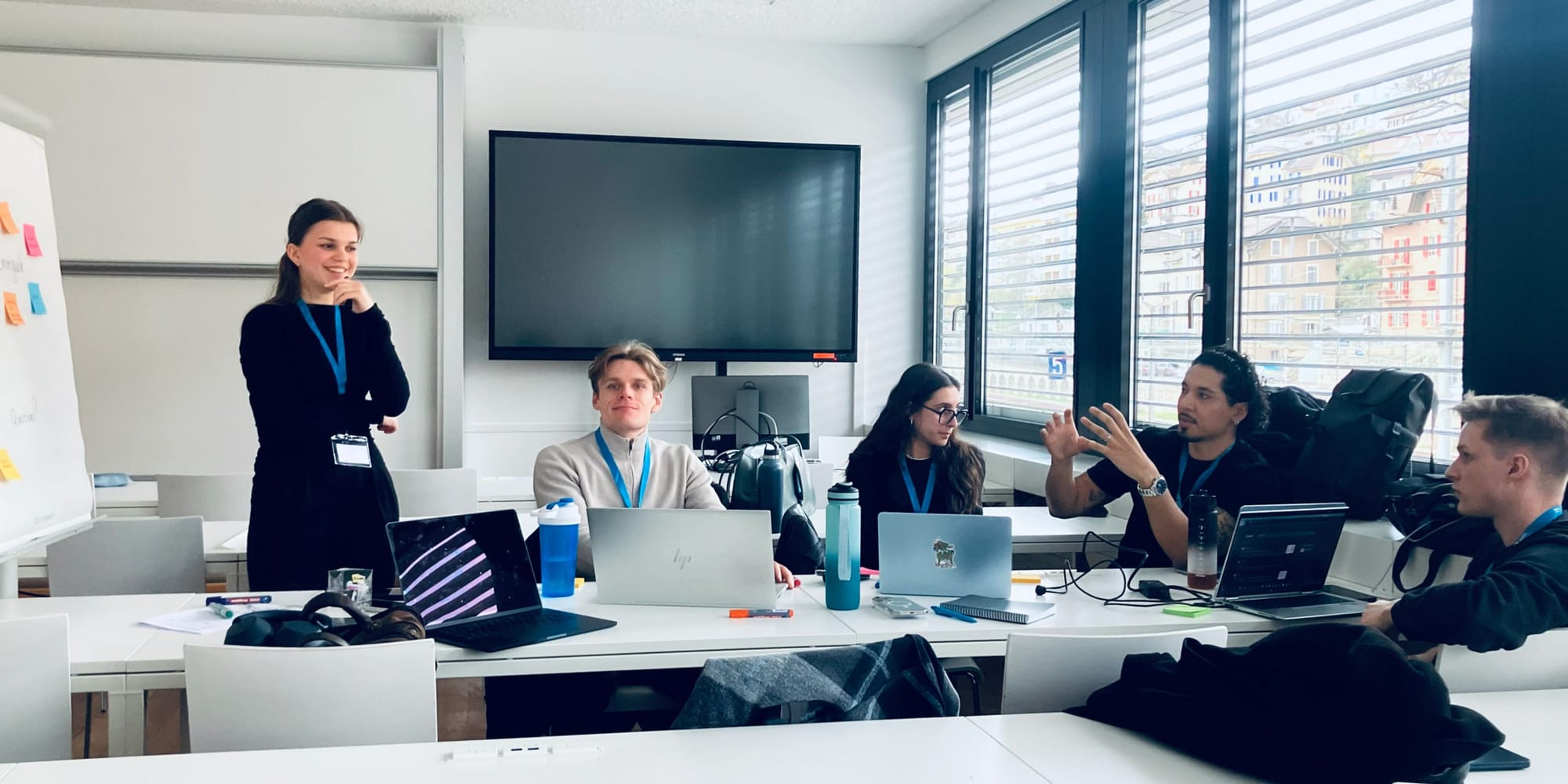
Civic hackathons are short, intensive events in which participants from different fields of expertise collaborate to develop ideas and prototypes – usually on a voluntary and unpaid basis. Among other things, such events bring together government and experts, whose knowledge and experience may be incorporated into the designs of political measures. They are particularly relevant in challenging policy areas where knowledge gaps or complex conditions can be addressed with technical solutions.
The effectiveness of civic hackathons depends heavily on their specific setup. As they often focus on digital solutions, they tend to attract tech-savvy participants, while industry expertise and the perspectives of average users are often underrepresented. Even if a diverse range of participants are encouraged to join the event, it is often unclear how they can be optimally combined into teams.
What makes a good team?
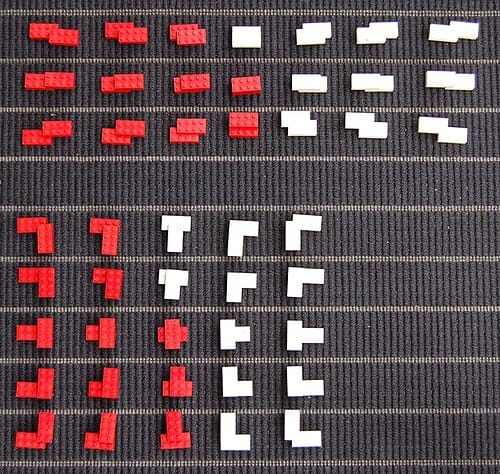
Research provides some waypoints to the question of what makes a good team. Management studies put emphasis on the importance of complementary skills and balanced team composition. However, they can be quick to underline that too much emphasis on diversity-building will add frictions. Hackathon-focused literature highlights team size and skill mix in particular, while more recent studies we looked at also examine demographic diversity. In practice, participants often organise themselves according to social customs or pre-existing networks, which in our view undermines the desired mix.
In computer science, team formation is seen as a combinatorial optimisation problem, where a target function is to be maximised under constraints – e.g. different diversity dimensions, with professional skills and competences being present multiple times within a team. Specialist literature also points out that participants may perceive controlled team formation as a loss of autonomy and transparency.
The potential of algorithmic team allocation
To explore the potential of algorithms in team allocation, we examined two civic hackathons. Hack4SocialGood was a smaller in-person event in 2020 with a focus on the social sector, in which the teams organised themselves. The event has been held annually since then. VersusVirus was a large-scale online hackathon in 2020 on topics related to the COVID-19 pandemic, in which an algorithmically supported team allocation was applied in advance.
Both approaches presented challenges. At Hack4SocialGood, technical skills were unevenly distributed and some teams were too small. At VersusVirus, participants reported confusion and frustration in team formation due to many absences and inappropriate allocations. Among other things, the algorithm was not able to correctly take into account the participants’ professional and linguistic skills and preferences, as these were sometimes overstated. Since the algorithmic allocation could not be repeated at short notice, the subsequent redistribution of teams was partly random.
The results suggest that participatory formats could benefit from a two-stage team formation process. A streamlined algorithm can be used in the first step to distribute skills more evenly at the start of the event and to take preferences into better account. The algorithm can also be used to divide the teams into suitable sizes, with key skills represented multiple times, which can help to mitigate the impact of absences. However, to improve acceptance of the algorithmic allocation, it must be transparent and participants must be allowed to maintain their autonomy. In a second step, participants can then independently adjust their teams so that everyone can work in a group that is suitable for them.

Hevenstone, D., Endrissat, N., Lavrovsky, O., & Hümbelin, O. (2026). Designing for diversity: team formation and participatory policy design. Policy Design and Practice, 9(2), 232–243.
Successes and obstacles
Based on these findings, we are currently investigating whether algorithmic team assignments improve collaboration when they clearly take into account diversity of skills and preferences. This question is also relevant for other kinds of teams. However, civic hackathons provide a suitable testing ground for research as they combine real-world problems with fast, observable feedback cycles.
Our initial results are somewhat ambiguous: diversity could be increased by algorithms to some extent, and teams could be divided into efficient sizes. However, the first analyses do not show clear improvements in terms of satisfaction, productivity or project results. In addition, communication and the implementation of proposals proved to be difficult (i.e. recommendations were sometimes ignored). Surveys after the events, however, showed that there is a general need for allocation. Therefore, it could be more a problem of implementation during the events and less to do with the use of the algorithm itself.
These results point to a fundamental tension: while diversity in teams is often considered desirable, in practice, hackathon participants often choose to work with people who are similar to them. As civic hackathons are voluntary and free events, this raises the question of the extent to which diversity can and should be specifically controlled in participatory formats. Another open question is the form and context in which controlled team formation is optimally implemented to support participants in their collaboration and improve their team experience.
References
 O Lavrovsky
 dribdat
Mirrored at https://codeberg.org/dribdat/dribdat/releases/tag/v0.9.4
Articles
Projects and partners
- Bessere Jobs für hochqualifizierten Geflüchtete dank diversen Hackathon-Teams?
- Hack4SocialGood
- VersusVirus Hackathon
Literature and links
- Berktaş, N; Yaman, H. (2020). A Branch-and-Bound Algorithm for Team Formation on Social Networks. INFORMS Journal on Computing 33(3):1162-1176.
- Büyükboyaci, M.; Robbett, A. (2019). Team Formation with Complementary Skills. Journal of Economics & Management Strategy 28 (4): 713–733.
- Ely, R. J.; Thomas, D. A. (2001). Cultural Diversity at Work: The Effects of Diversity Perspectives on Work Group Processes and Outcomes. Administrative Science Quarterly 46 (2): 229–273.
- Page, S. E. (2017): The Diversity Bonus: How Great Teams Pay Off in the Knowledge Economy; Princeton University Press
- Rutherfoord, R. H. (2001). Using Personality Inventories to Help Form Teams for Software Engineering Class Projects. In: Proceedings of the 6th Annual Conference on Innovation and Technology in Computer Science Education, 73–76.
 The works on this blog are licensed under a Creative Commons Attribution 4.0 International License