125 #opensourceai
Today at BFH in Bern, the Open Source AI Conference 2026 brings us together to share insights, perspectives, and practical experiences.

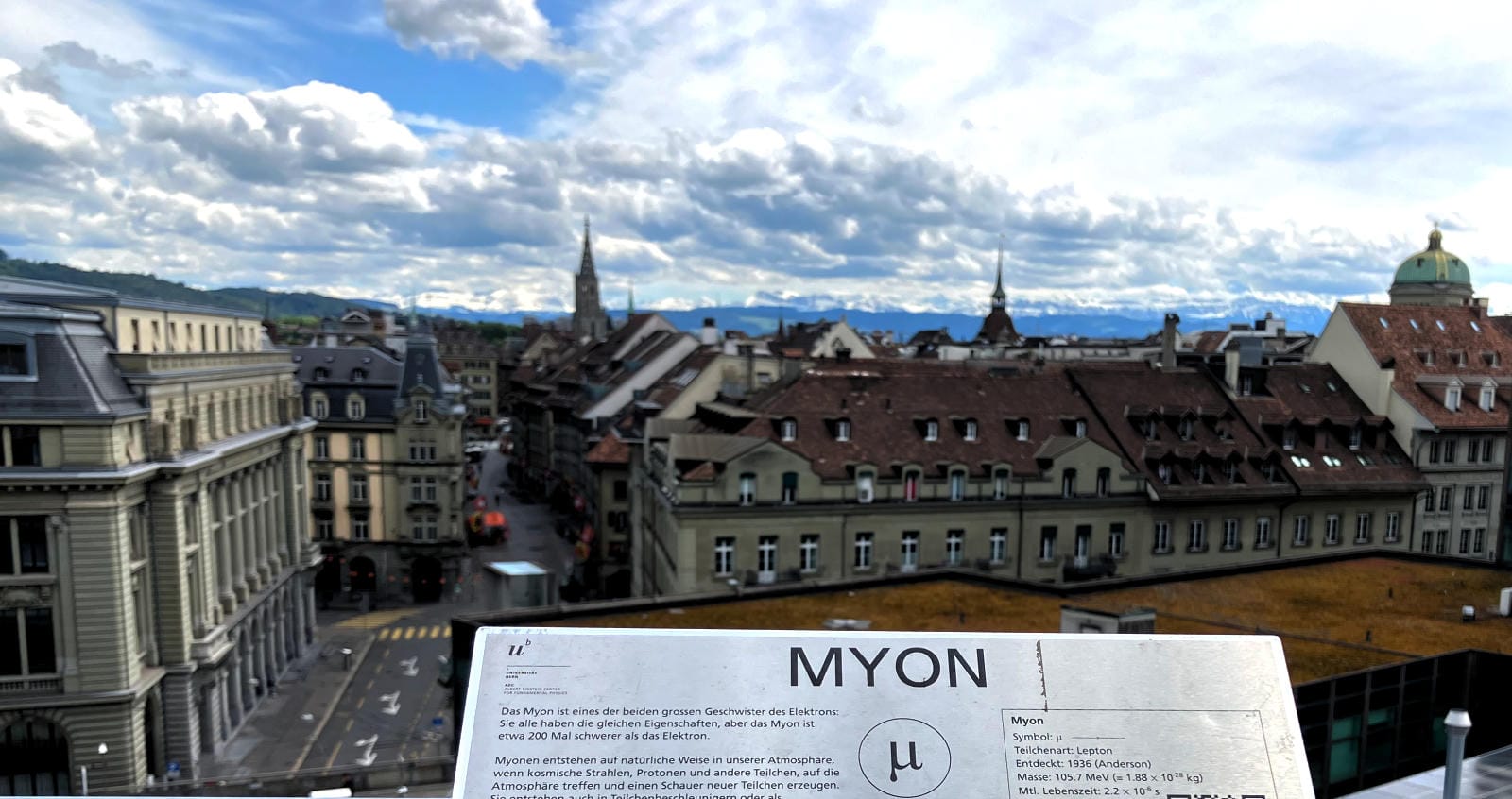
My impressions of the Open Source AI 2026 Conference, organized by CH Open in Bern. Today's event was organized around themes of openness, discussion of tech stacks and standards, and exchanges on a rather abstract level rather than specific applications, with a strong emphasis on Swiss and European perspectives. It followed two days of practical workshops with experts on the topic.

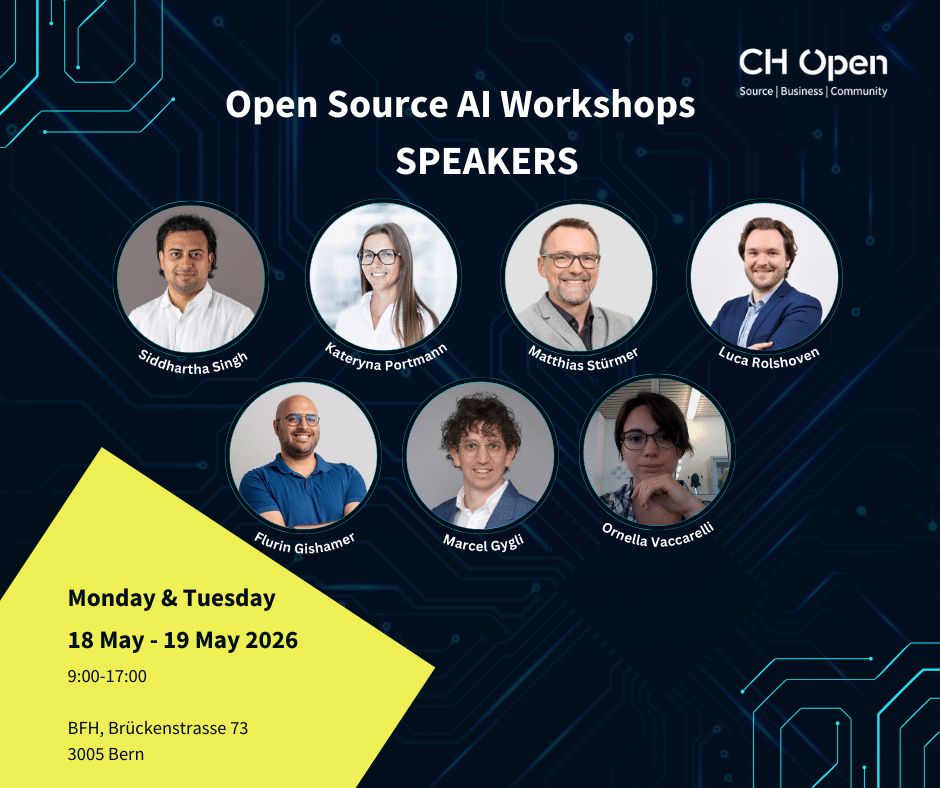
This year again there was focus on the importance of ethical and legal considerations, security, sustainability, and accessibility of LLMs development and deployment. The panel discussions and networking apéro fostered collaboration and discussion among attendees from various backgrounds and interests. See also my coverage of the 2025 events:
 O Lavrovsky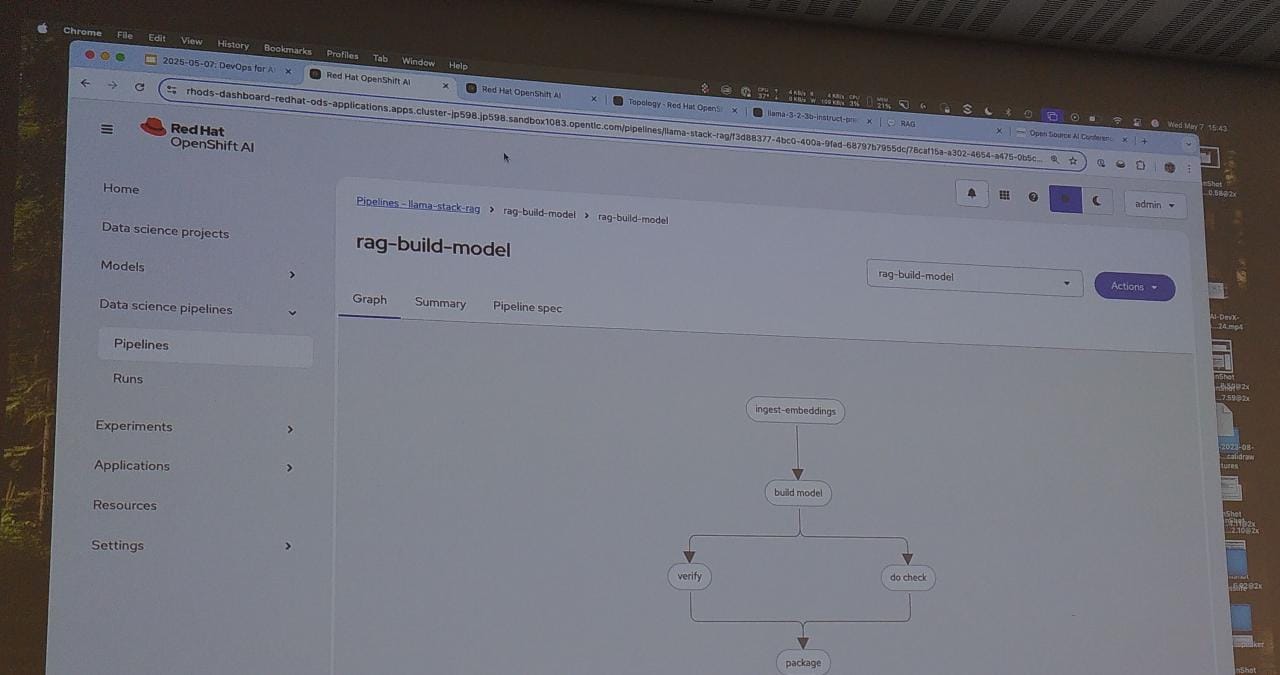
The stage was set in the university aula by Markus Danhel (IBM), who mentioned a lot of interesting trends and was an excellent moderator of the panels. He noted a new project picking up traction: OpenRAG, built by the Linagora (which also started the OpenLLM France community), offering a sovereign-by-design alternative to mainstream RAG stacks.
 Silicon.fr,
Prof. Matthias Stürmer (BFH) welcomed us to the conference, and opened to floor to Imanol Schlag, Research Scientist at the ETH AI Center and co-lead of the Apertus models.
There was a brief but in-depth discussion on how the Apertus models, developed under the Swiss AI Initiative, aim to democratize the development and use of LLMs, by making the whole process open source and accessible globally. There were insights into how the models compare with other sovereign AI efforts, and their potential to bridge the gap between research, industry, and public use.
Daniel Brunner is head of the IT Department at the Swiss Federal Supreme Court. He shared insights from a pilot that leveraged open source AI technologies, specifically evaluating Llama 3.3 and Apertus 1.0, describing the challenges and benefits of integrating such technologies into a high level government institution.
It's worth reiterating these points here:
What values should AI systems reflect?
- The data used to train these systems reflects a worldview
- Social values differ from country to country and from population to population
- The values learned by these models are associated with their creators
- As sources of information, these systems will influence our view of the world when we interact with them
- If we want to be able to study, monitor and reliably operate these systems in line with the expectations of Swiss society, we have to create them ourselves in Switzerland.
Daniel Brunner’s points emphasize the importance of developing AI systems locally to ensure they reflect the values of the society they serve. For this, ChatTF is an interesting use case, and excellent appeal for making better data available for LLM training. You can find some more details on this pilot here (efk.admin.ch).
Dr. Chantelle Brandt Larsen (Systematic-X) explored cultural and ethical considerations in AI development and deployment, discussing how cultural differences can actually inform the design and governance of AI systems, and potentially ensure they are more culturally sensitive and inclusive. An encouraging perspective that was further explored in the panel.
Open space
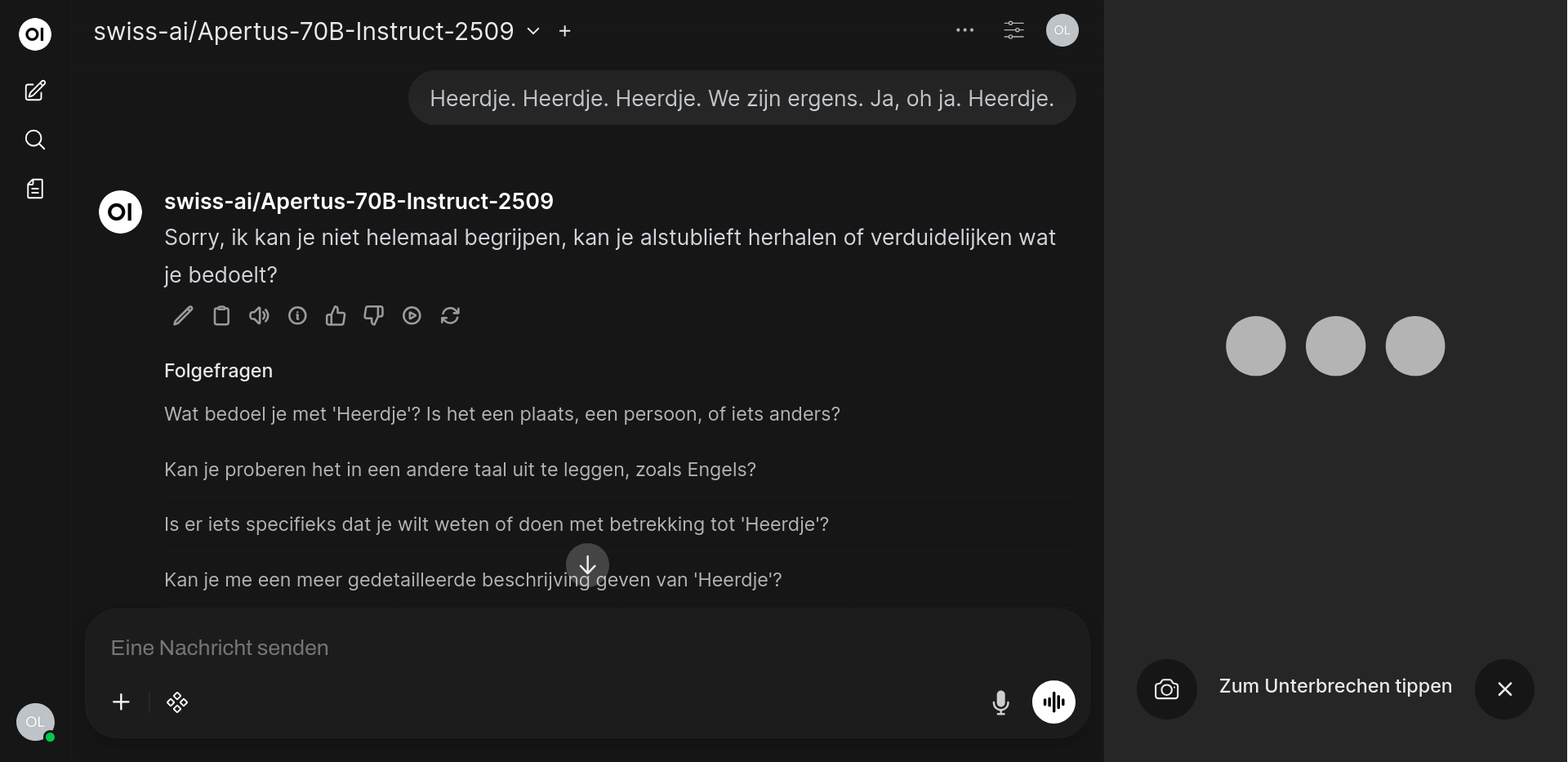
In the break, I ran Apertus demos in a corner of the lounge: this included walkthroughs of the Swisscom and Infomaniak offerings, the Public AI (OpenWebUI) service:
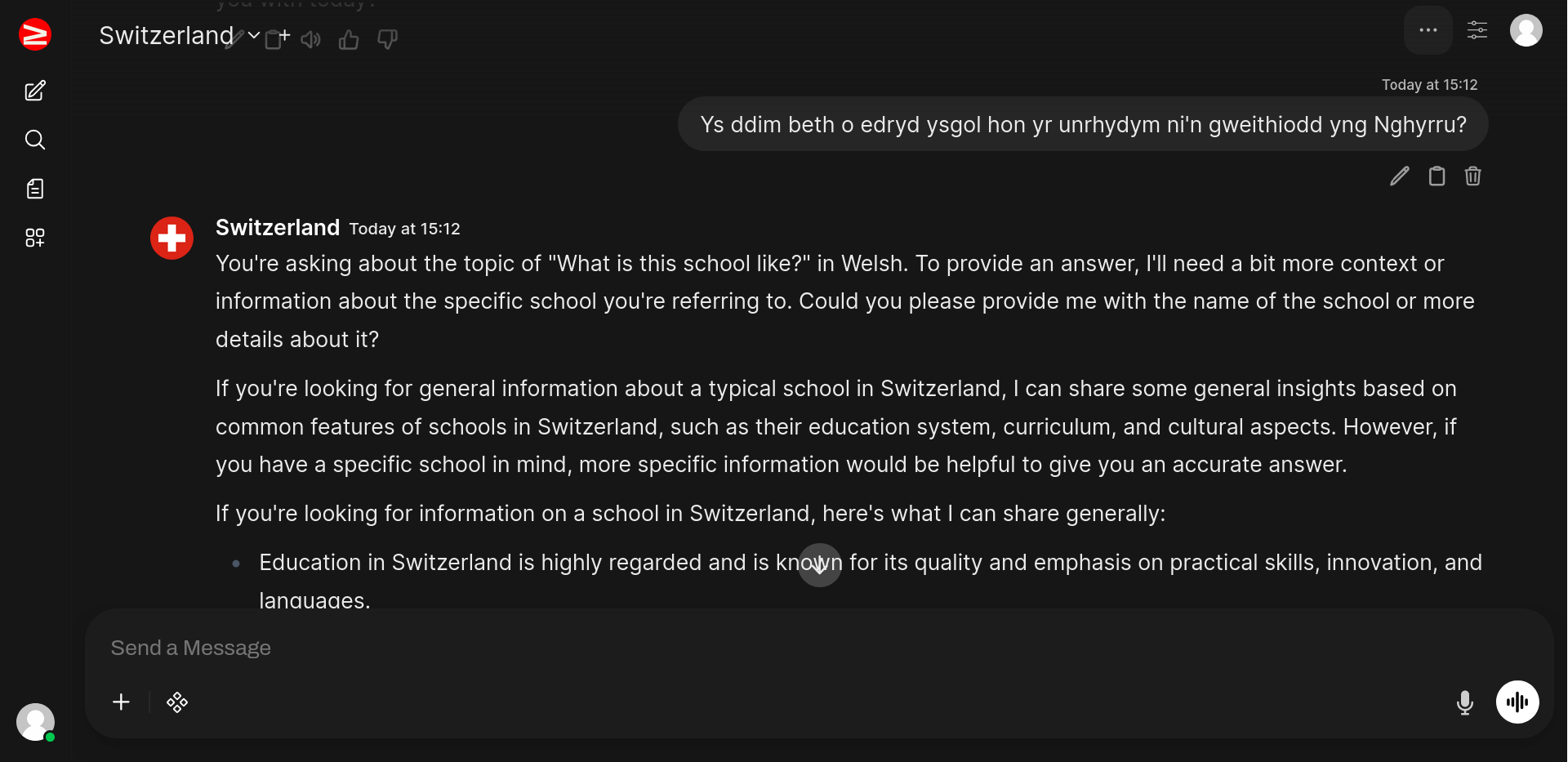
Which is almost identical to the serving platform used for 'vibe tests' by our engineering team. Someone tried to speak Dutch to Apertus using the voice mode of OpenWebUI:
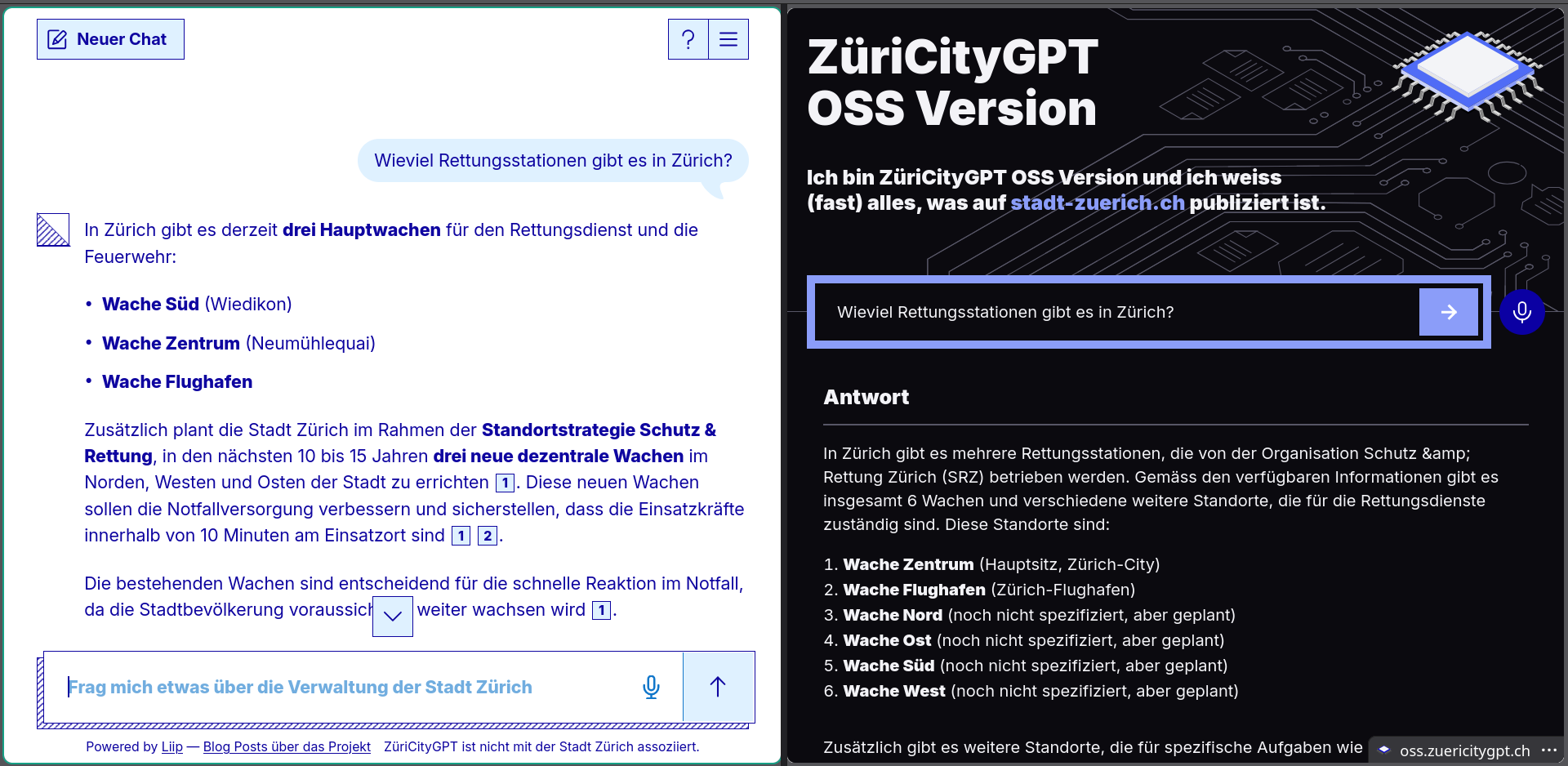
For a quick comparison, it's nice to be able to pull up the (inofficial) ZüriCityGPT OSS Version chatbot developed by our friends in Zürich, and compare it (on the left) to the one using commercial frontier models:
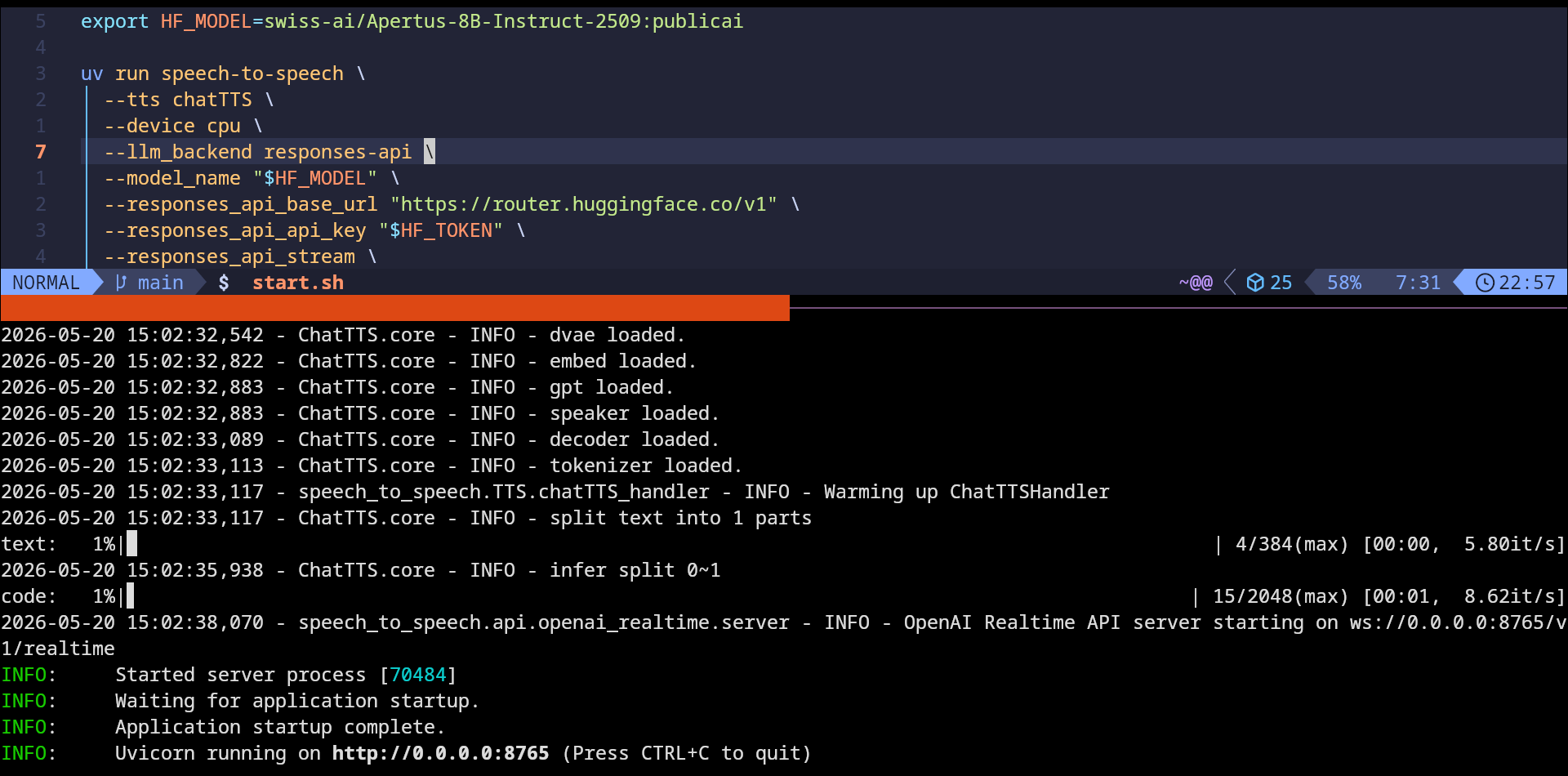
For another demo, I installed the Reachy Mini from #siliconlovefield, which was connected to the new speech-to-speech API from Hugging Face. It can use Apertus as the LLM backend, in combination with a speech-processing engine like ChatTTS, made possible through a recent PR.

This will work even better in the soon-to-be-released 1.5 version with improved instruction following. My demo is until then quite brittle – and it was very loud in the room anyway.
 O Lavrovsky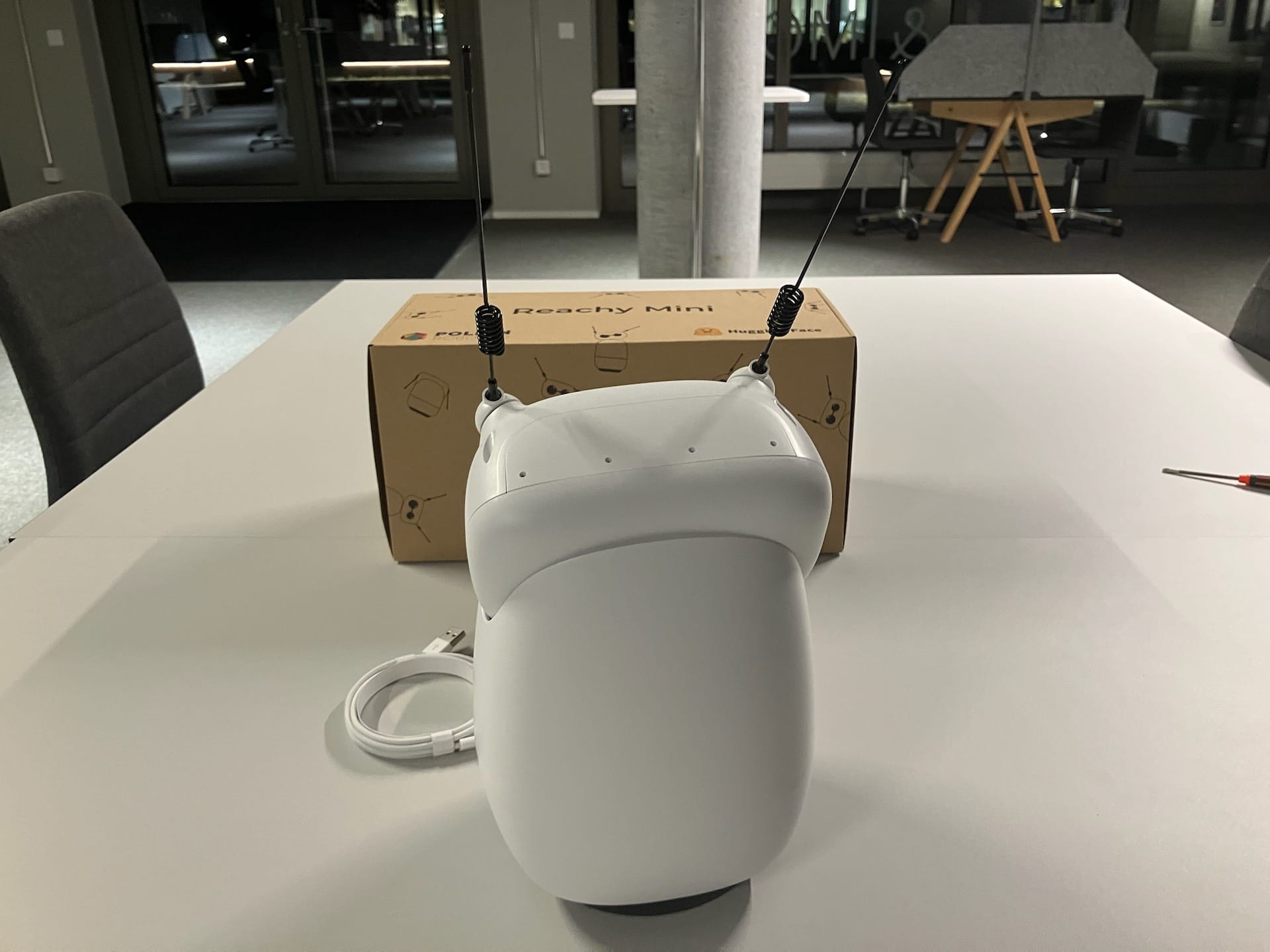
See my earlier blog posts for some background on the Reachy desktop robot
In the second part of the conference, we heard from Aarno Aukia (VSHN) on the importance of building independent AI infrastructure, using open source technologies to ensure sovereign development and use, with a focus on practical strategies and experiences from his work. Unfortunately, I had to be out for a call during his presentation, so please give me a shout if you took some notes.
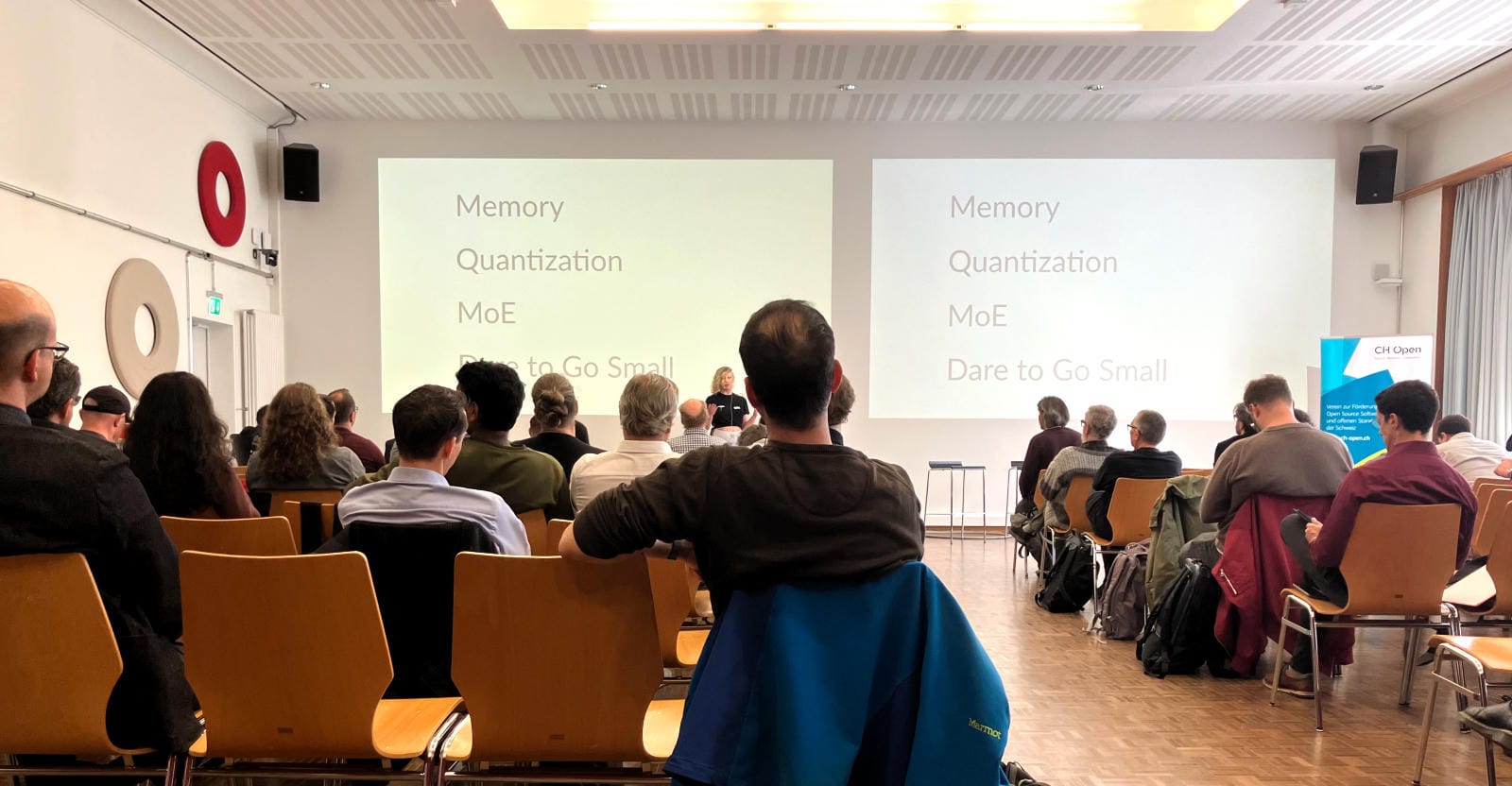
Lena Fuhrimann (bespinian) gave an overview of emerging techniques and tools like vLLM and llm-d for building and deploying large language models efficiently while maintaining privacy and security, particularly useful for organizations that need to deploy AI responsibly and securely.
Camille Nigon (Red Hat) examined of how open source projects like the ones Lena introduced enable cost-effective and sustainable scaling of large language models, and how organizations can leverage these tools for their AI needs without being locked into proprietary solutions.
The final discussion panel dove further into the practical implications of the technologies and strategies presented today, including the balance between openness, sustainability, and practical deployment challenges in different sectors. The audience was very engaged, and lively debates ensued in the closing apéro.
Many thanks to CH Open, especially the event organizer Kateryna Schütz, to today's sponsors, and my friends and colleagues at BFH, ETH, EPFL for supporting the event. Further coverage will soon be on the official Mastodon and LinkedIn accounts of CH Open. I used Apertus to support the writing of this post, and am looking forward to your feedback.


PS. my blog was maliciously hijacked yesterday - if you run a self-hosted Ghost instance, be aware of a spate of recent attacks that use the Zapier integration (which is there by default and cannot be turned off) to add malicious content to your site. Patch early, patch often!
 yyghost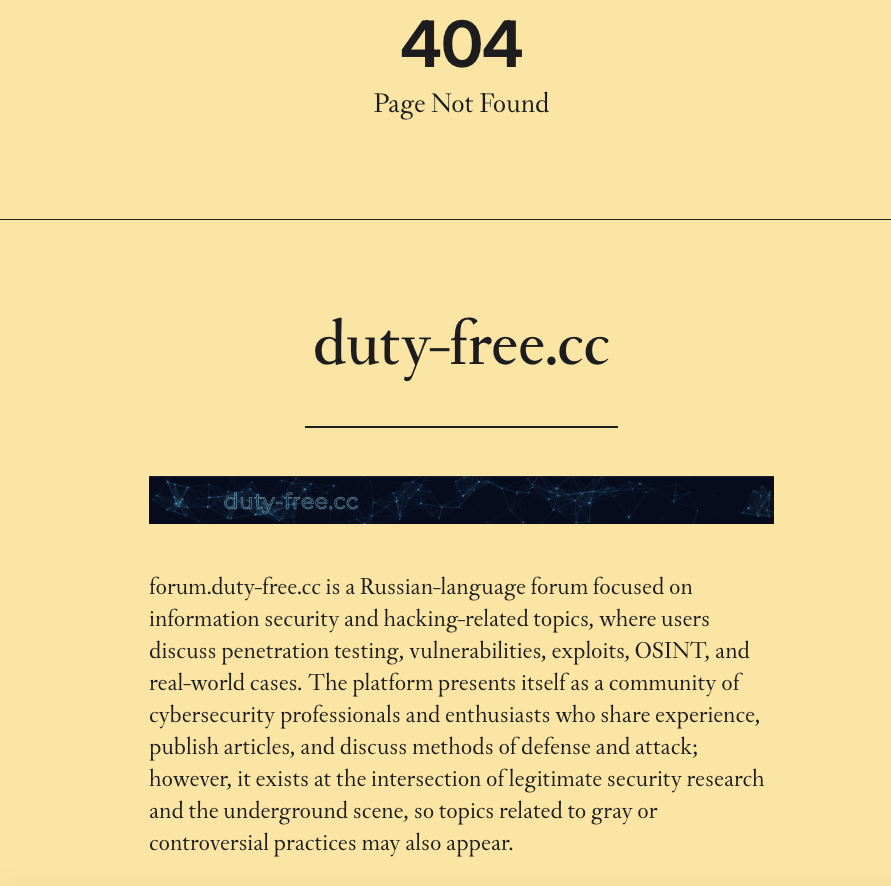
 The works on this blog are licensed under a Creative Commons Attribution 4.0 International License